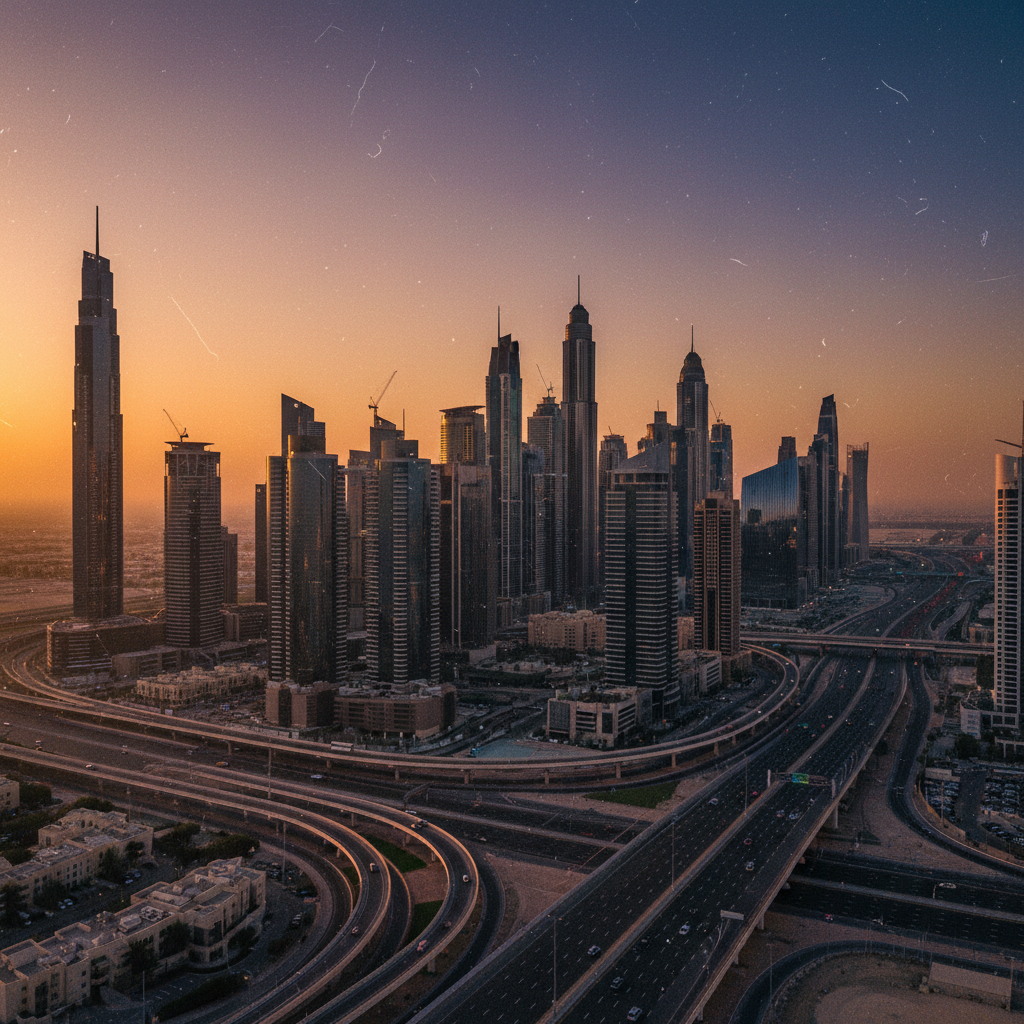
Drone cinematography in Dubai: the essentials
Dubai's skyline is one of the most recognisable in the world. If you're shooting video here and not using a drone, you're leaving half the story on the ground. Aerial footage gives your brand a perspective that ground-level shots just can't deliver -- the full scale of a Palm Jumeirah villa, the energy of Sheikh Zayed Road at golden hour, the geometry of a Downtown tower against open sky.
But flying a drone commercially in Dubai isn't a plug-and-play situation. The DCAA has rules, the DFTC requires permits, and skipping either can cost you more than just the footage. Here's what you actually need to know to shoot legally and creatively in the UAE.
DCAA rules: what you can and can't do
The Dubai Civil Aviation Authority runs a tight operation. Every drone used commercially has to be registered. Not optional, not a grey area -- registered. Your pilot needs a valid DCAA commercial drone license, which means training, exam, and recertification.
The basic limits are straightforward:
- Altitude: max 400 feet (120 metres) above ground. No exceptions without special clearance.
- Line of sight: you have to see the drone at all times. No flying blind behind a building.
- No-fly zones: airports (DXB, DWC, Al Maktoum), government areas, military zones, and certain residential districts. These are strictly off-limits.
- Private property: flying over someone's land or building needs their explicit consent.
A lot of people treat these rules as a suggestion. They shouldn't. Penalties include fines, equipment confiscation, and in some cases legal proceedings. If your drone work is for a client, you don't want that conversation.
Getting a commercial filming permit: the DFTC process
Registration and a license cover the basics. But for commercial drone cinematography in Dubai, you also need project-specific permits through the Dubai Film and TV Commission (DFTC). This is a separate step that a lot of production companies overlook until they're standing on location with a drone and no paperwork.
Your permit application needs to include:
- Project description and scope
- Exact shoot locations (Downtown Dubai, Dubai Marina, Palm Jumeirah, JBR -- be specific)
- Dates and times for each location
- Flight plan for each shoot
- Drone specs and pilot credentials
- Insurance certificates
- NOCs from any property owners or management companies
If you're shooting around Burj Khalifa or within Emaar-managed communities, expect to chase separate approvals from the developer on top of the DFTC permit. Plan for 3-5 working days on the low end, longer if the locations are complex. A professional video production team that handles DFTC applications regularly can save you weeks of back-and-forth.
Creative applications: where drone footage works best in Dubai
Once the paperwork's sorted, the creative side opens up. Here's where aerial footage consistently delivers for Dubai businesses:
Real estate. A villa community on Palm Jumeirah, a tower in Business Bay, a commercial complex in Dubai South -- drones capture the scale and context that ground photography misses. For developers running real estate video marketing campaigns, it's the difference between showing a building and showing a lifestyle.
Tourism and hospitality. Hotels on JBR, desert resorts in Al Maha, yacht operators in Dubai Marina -- aerial shots sell the experience faster than any brochure. Tourists don't book a room because of the lobby photo; they book because the drone shot made the pool look incredible.
Corporate and industrial. DIFC headquarters, Dubai Media City campuses, Dubai South logistics centres. An establishing aerial shot immediately communicates scale and professionalism. Construction firms also use drones for progress tracking, safety documentation, and compliance reporting.
Events. Expo City Dubai, Dubai Opera, festival sites -- big events need big coverage. A drone captures crowd energy, venue scale, and atmosphere in a single sweeping shot. Post-event marketing material benefits massively from that kind of footage. We covered this more in our piece on how mega-events shape Dubai production trends.
Luxury and lifestyle. Cars along the Palm, fashion shoots against desert dunes, private dining at Atlantis. Drone footage positions your brand in Dubai's premium visual language.
Post-production matters: making aerial footage look professional
Shooting the drone footage is one thing. Making it look cinematic is another. Raw drone footage tends to be flat, oversharpened, and colour-shifted from the wide-angle lens. If you're delivering it directly to a client, you're underselling the work.
Colour grading, stabilisation, and speed ramping turn raw drone clips into something that looks like it belongs in a campaign. A lot of studios are handling this remotely now -- cloud-based video editing workflows let colourists work on your drone footage without being in the same room, which is useful when your shoot wrapped at 2 AM in Abu Dhabi and the editor is in Dubai Marina.
Picking the right drone operator in Dubai
Not every company that owns a drone can legally shoot commercial footage in Dubai. When you're choosing a partner, ask the right questions:
- Are your pilots DCAA-licensed?
- Do you handle DFTC permit applications?
- Show me your insurance.
- What's your portfolio for commercial work in Dubai specifically?
A qualified operator knows the local quirks: which locations need approvals from specific developers, which times of day avoid harsh light and strong winds, when sandstorms make flying impossible. They'll also know the cultural sensitivities -- some areas don't appreciate drones regardless of altitude.
Local knowledge separates a smooth shoot from a day spent arguing with security. Invest in it.
The bottom line
Drone cinematography in Dubai is worth the paperwork. The aerial perspective works for real estate, hospitality, corporate branding, events, and luxury marketing in ways that ground-level video can't match. But you have to do it right -- DCAA registration, licensed pilots, DFTC permits, proper insurance, and a post-production pipeline that turns the raw footage into something polished.
Plan ahead, get the permits in order, and work with people who know how the system operates here. The results speak for themselves.
Looking for video production services for businesses in the UAE? Professional production partners can help bring your creative vision to life.
For more on video marketing insights, explore industry resources and stay updated on the latest developments.
For professional drone videography and aerial filming services in the UAE, working with experienced professionals ensures outstanding results.