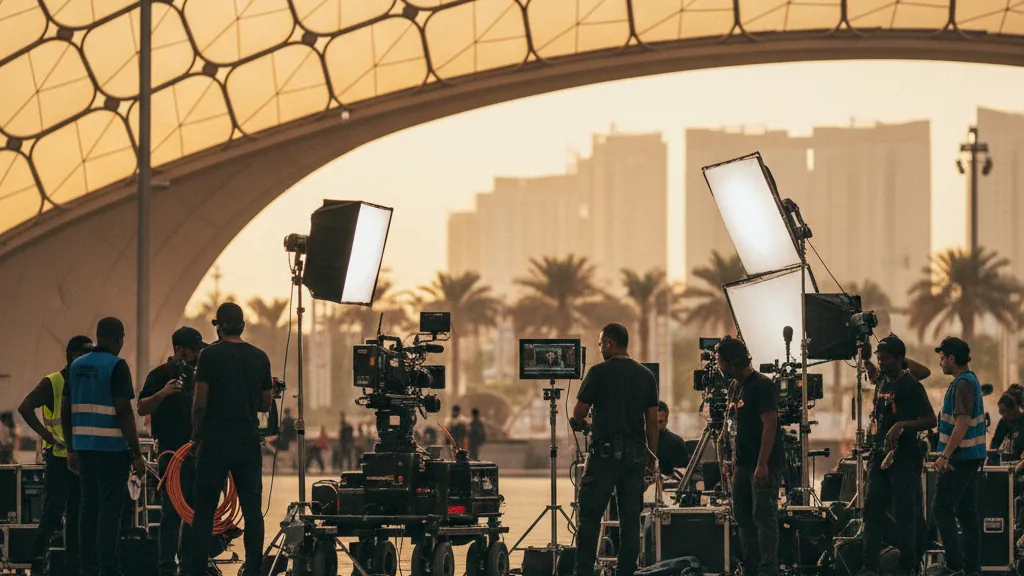
The Event That Changed Everything
Before Expo 2020 Dubai, the city already had a respectable production scene. Commercial shoots at five-star hotels. Corporate videos for government entities. The occasional music video shot against the skyline. But mega-events operate at a different scale entirely.
When Dubai won the bid to host the World Expo, the production landscape didn't just grow — it transformed. The scale of content required, the speed of delivery expected, and the global audience standards demanded pushed every production team in the city to level up. Five years later, Expo City Dubai continues to shape how we make video in this region.
What Mega-Events Demand From Production
A standard commercial shoot runs on a schedule measured in days. A national pavilion campaign runs on a schedule measured in years. That's a different production philosophy entirely.
During the Expo build-up, production companies across Dubai had to scale fast. Multiple camera crews running simultaneously across different pavilions. Content that needed to speak to audiences from Southeast Asia, Europe, Africa, and the Middle East in the same campaign. Deliverables in formats ranging from IMAX projection to Instagram Reels, all from the same source footage.
This forced three permanent changes to how Dubai productions operate:
Kitchen-sink crew models died. You can't run a year-long campaign with a two-person team. The Expo years trained a generation of producers, DPs, and editors who can handle multi-crew, multi-location shoots as a normal workflow, not a special event.
Bilingual and trilingual production became standard. When your client needs content in Arabic, English, Mandarin, and French simultaneously, you learn to plan for language layers from pre-production, not as a post-production afterthought. This capability stayed in the market.
Post-production speed doubled. The turnaround expectations from Expo work were brutal. Same-day edits for social coverage. Forty-eight-hour turnaround for broadcast spots. The editors who survived that pace now treat standard commercial deadlines as generous.
Expo City Dubai: The Permanent Test Bed
Expo City Dubai isn't a museum. It's an active venue hosting conferences, concerts, exhibitions, and brand activations every week. Al Wasl Plaza, with its 360-degree immersive projection surface, remains one of the most technically demanding venues in the region to shoot in.
The lighting conditions alone require serious camera work. The dome's lattice structure creates constantly shifting shadow patterns throughout the day. The reflective surfaces bounce light unpredictably. If you can exposure-map a shoot inside Al Wasl, you can handle almost any mixed-lighting environment in the city.
For production crews based in Dubai, Expo City has become the go-to stress test for new gear and workflows. Testing a new gimbal stabilization system? Shoot a walkthrough of the plaza. Trying out a new wireless follow-focus setup? Run a talent tracking test across the Suraqa platform. The space functions as an unofficial film-friendly R&D lab.
Technology That Stuck Around
Mega-events introduce technology that smaller productions normally wouldn't invest in. Once the gear is in the market, it doesn't leave.
The Expo drove adoption of several production technologies that are now standard in Dubai:
Wireless video transmission. With crews spread across a 4.38-square-kilometre site, running SDI cables everywhere wasn't feasible. Teradek and similar wireless systems became the norm. Now you see them on every multi-camera shoot in the city.
Cloud-based dailies. Reviewing footage from thirty cameras across multiple pavilions meant cloud workflows were a necessity, not a convenience. Frame.io and similar platforms became standard during Expo and stayed standard after.
Virtual production infrastructure. The Expo's immersive pavilion experiences pushed Dubai's LED volume capabilities forward significantly. The same technology that powered pavilion content is now available at several production studios across Dubai Media City and Dubai Studio City.
What This Means for Brands in 2026
If you're a brand producing video content in Dubai today, you're working with a crew that was sharpened by the Expo years, even if they weren't directly involved. The baseline has shifted.
Expect faster turnarounds than producers in comparable markets can deliver. Expect crews that handle complex multi-location days without blinking. Expect a level of bilingual and multilingual production capability that's genuinely hard to find outside Dubai.
The Expo didn't just raise the bar for the companies that worked on it. It raised the bar for everyone who works in the industry here, because the talent pool trained on those projects now works across the market. A producer who cut their teeth on a national pavilion shoot is now running commercial campaigns for local restaurants, real estate developers, and retail brands. The Expo skillset has permeated the entire production ecosystem.
Practical Advice for Your Next Shoot
If you're planning a video production in Dubai and want to take advantage of the post-Expo production landscape, here's what I'd recommend:
Book Expo City as a location. The architecture is world-class and the venue management is production-friendly. You can shoot at Al Wasl Plaza, the Sustainability Pavilion, or the Terra Auditorium with proper permits. The visuals are instantly recognizable and globally competitive.
Ask about multi-crew capability. Most established Dubai production houses can run multiple units simultaneously. If your campaign needs a hero film plus social cutdowns plus behind-the-scenes content, you can shoot everything in one day with parallel crews. That wasn't the standard before Expo.
Test your crew with a challenging location first. A brand that shoots a test piece at a technically difficult venue like Expo City will know exactly what their production partner is capable of before the actual campaign starts. Consider it a paid tech scout with a finished piece at the end.
Don't underestimate the legacy. The production infrastructure, talent depth, and technical capability that exist in Dubai today are directly traceable to the mega-event era. It's not just a different market from 2019 — it's a different industry.
This legacy also feeds directly into how Dubai markets itself to the world. The same production muscle that powered pavilion campaigns now drives the city's tourism marketing strategy, where video is the primary medium for attracting millions of visitors annually. Explore how in our post on the role of video in Dubai's tourism marketing strategy.
The Expo years are over. The Expo City era is just beginning. And the video production trends they set are still shaping every frame shot in this city.
Explore how 360 video and VR production services in the UAE can transform your brand storytelling with immersive experiences.
Looking for professional video production services in the UAE? Professional production partners can help bring your creative vision to life.
For more on video production best practices, explore industry resources and stay updated on the latest developments.
Saudi Arabia's mega-projects like NEOM and Diriyah Gate are following a similar trajectory, creating massive demand for video production services. Read our analysis of Saudi Arabia's media boom and opportunities for Dubai production companies.