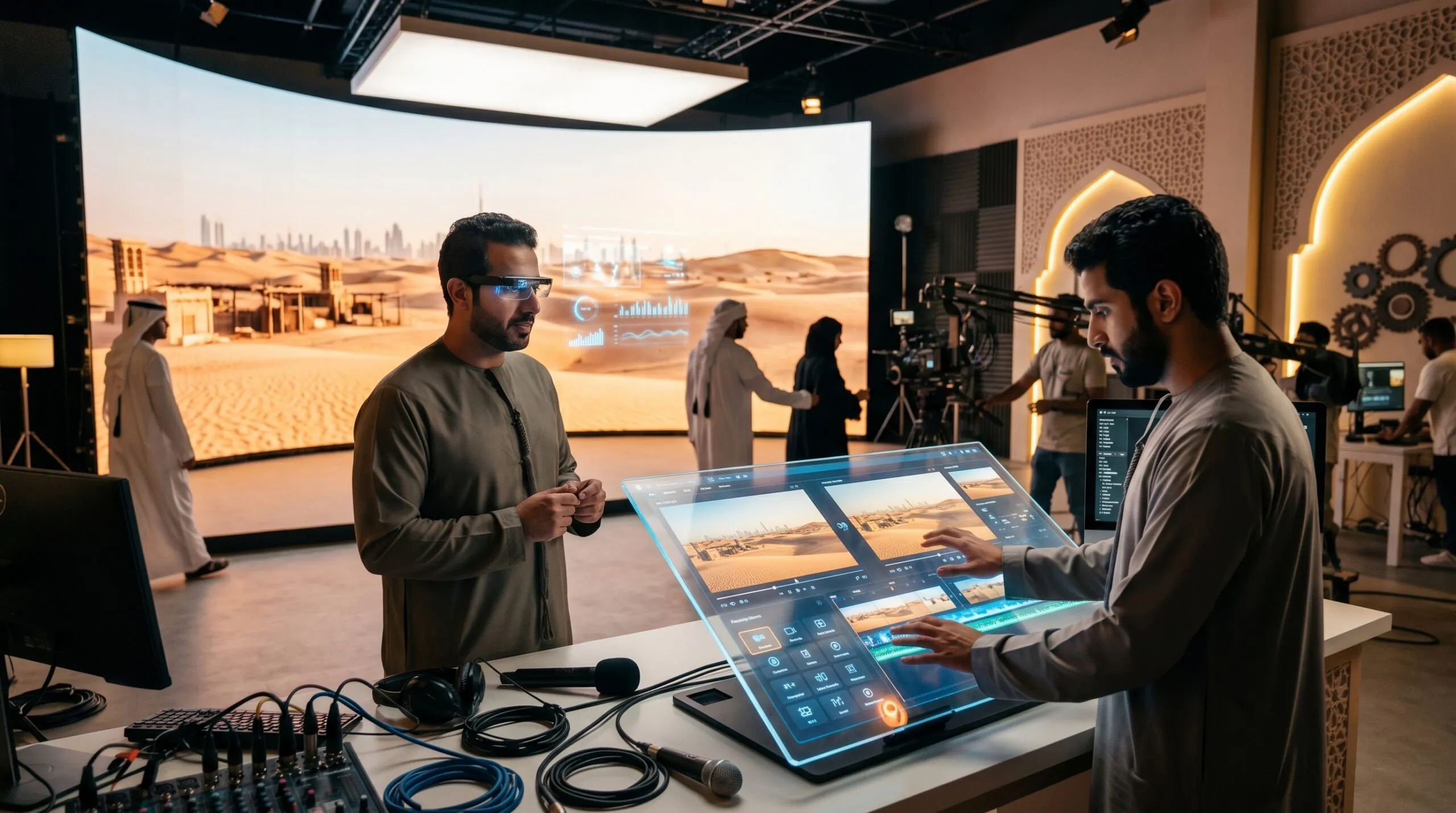
Okay, let’s be real for a second. If you’re still making videos like it’s 2024, you’re not just behind—you’re missing the point entirely. The whole game changed last year, and 2026 is when everyone figures out whether they’re playing chess or checkers.
At JJ Agency Films, we live in this stuff every day. What we’re seeing isn’t just new gear or software updates. It’s a complete rewrite of how videos get made, who makes them, and why anyone bothers to watch.
1. AI Is Your New Assistant Director (Not Your Replacement)
Remember all that noise about AI stealing creative jobs? Turns out the reality is way more interesting. AI isn’t replacing filmmakers—it’s becoming the most useful crew member you’ve ever had.
Here’s what’s actually happening in edit bays right now:
- Script tools that predict boredombefore you even roll camera. They scan thousands of successful videos to spot patterns in what keeps people watching—specific dialogue rhythms, pacing tricks, emotional beats that work.
- Color grading that remembers your brand’s look.We’ve trained systems to recognize the difference between a luxury hotel’s palette and a tech startup’s vibe. It applies that look consistently, so everything you make feels like part of the same world.
- Voice repair that saves impossible shots.Perfect take ruined by construction noise? AI can rebuild the voice while keeping the actor’s unique sound. We’ve saved weeks of reshoots this way.
- Budget predictors that spot trouble early.The system looks at similar projects and says, “Hey, you always go over on location fees around day three.”
- First 5 seconds:Hit them with raw emotion or a statement that makes them go, “Wait, what?” No logos. No “Hi, I’m…” Just immediate human reaction.
- 5-25 seconds:Show the problem. Don’t explain it—show it. Someone facing a challenge, a question that needs answering, a thing that needs fixing.
- 25-45 seconds:The twist or insight. One surprising fact. One emotional reveal. The “oh, I didn’t know that” moment.
- 45-60 seconds:Payoff that feels earned. The resolution delivers on the opening promise and leaves them with something to think about.
- Dynamic product placement:The car in the ad matches what you’ve been browsing online all week.
- Endings that shift:The conclusion changes based on how engaged you are while watching.
- Localized everything:Backgrounds, actors, even cultural references adjust to your location.
- Process documentaries:Show how things get made, not just the finished product.
- Real people telling real stories:Let the employees doing the work explain what they do.
- Customer stories with production value:Give testimonials the same care you give your main content.
- Deeper immersion:Sound coming from specific directions pulls you into the world.
- Better memory:People remember 40% more information with spatial audio.
- Actual accessibility:Directional sound helps viewers with visual impairments follow what’s happening.
- Real explosions + digital particles:The base is practical, the enhancement is digital.
- Forced perspective 2.0:Old-school camera tricks perfected with AI assistance.
- Miniature worlds:Physical models scanned into digital environments.
- “Where does your equipment come from?”
- “Who’s behind the camera?”
- “What’s the carbon footprint of this shoot?”
Last month, we fed 50 hours of interview footage into an AI for a documentary. In 45 minutes, it mapped every emotional journey, suggested which stories would hit different audiences, and even flagged moments where what people said didn’t match their body language. Our editor then spent two weeks doing what humans do best: shaping the story, finding the rhythm, making creative calls that require actual judgment.
The truth? Every major studio uses these tools now. They just don’t talk about it because “handcrafted” sounds better than “AI-assisted.” In Dubai, we’re upfront about it. The magic isn’t in pretending the technology doesn’t exist—it’s in using it to make better art.
2. The 60-Second Story Revolution
TikTok didn’t just make videos shorter. It rewired how we tell stories. Now audiences expect complete narratives in under a minute, and honestly? That constraint makes us better filmmakers.
**Here’s why it works:** Our brains process visuals in 3-5 second chunks anyway. The 60-second format forces us to work with that rhythm instead of fighting it.
**The structure that actually holds attention:**
We used this approach for a manufacturing client in Abu Dhabi. We made 60-second docs about quality control techs—each video followed a worker finding a flaw, tracking it down, fixing it, seeing the better product result. View completion hit 94%. Job applications for technical roles jumped 40%.
Why? Because we showed purpose, not just jobs. The lesson isn’t “make shorter videos.” It’s “make every second matter.”
3. Videos That Know Who’s Watching
Remember Netflix’s “choose your own adventure” stuff? That was just the warm-up. Now we make videos that change based on who’s watching.
**Real examples from our work:**
For a hotel chain, we made 1,200 versions of one 30-second spot. Each showed rooms and amenities matched to the viewer’s travel history and current searches. Conversions tripled. People weren’t just watching an ad—they were seeing their next vacation.
4. Nobody Wants Another Talking Head
The corporate talking head video—executive at a desk, explaining things—is dead. Audiences have what psychologists call “authority fatigue.” They’re tired of being talked at.
**What works instead:**
We recently made a series for a tech company where the CEO was banned from appearing. Instead, we followed junior developers solving actual problems. The authenticity cut through the noise in ways no polished executive message ever could.
5. Sound You Can Feel
With Apple’s Vision Pro and similar gear hitting mainstream, spatial audio isn’t a novelty anymore—it’s expected.
**Why it changes everything:**
We now mix everything in spatial audio first, stereo second. The difference in how long people watch is night and day.
6. Real Stuff Is Back (With Help)
After years of CGI everything, audiences want to feel things again. They want texture, weight, reality. But they still want the impossible.
**Our hybrid approach:**
For a car commercial, we built a 1:10 scale model city and shot it with motion control. The result had the heft of reality with the flexibility of CGI. It cost 30% less than full CGI and tested better with every focus group.
7. Ethics as a Feature, Not a Footnote
Carbon-neutral shoots, diverse crews, fair pay—these aren’t just PR talking points anymore. Audiences check, and they care.
**What clients actually ask us now:**
We built a scoring system for production ethics. Clients can see exactly how their video measures up on environmental, social, and economic fronts. It’s becoming a deciding factor in who gets hired.
So What Actually Matters?
Video production in 2026 isn’t about chasing shiny objects. It’s about understanding that everything changed while nobody was looking.
The work that stands out will:
1. **Use AI as a creative partner,** not just a fancy tool
2. **Respect viewers’ intelligence** with tight, smart storytelling
3. **Personalize without losing production quality**
4. **Choose authenticity over polish** every time
5. **Consider the whole experience,** from how it sounds to how it was made
The real question isn’t whether you need to change your video strategy. It’s whether you want to help define what comes next or spend the next two years playing catch-up.
Explore how 360 video and VR production services in the UAE can transform your brand storytelling with immersive experiences.
Looking for video production services for businesses in the UAE? Professional production partners can help bring your creative vision to life.
For more on video marketing insights, explore industry resources and stay updated on the latest developments.