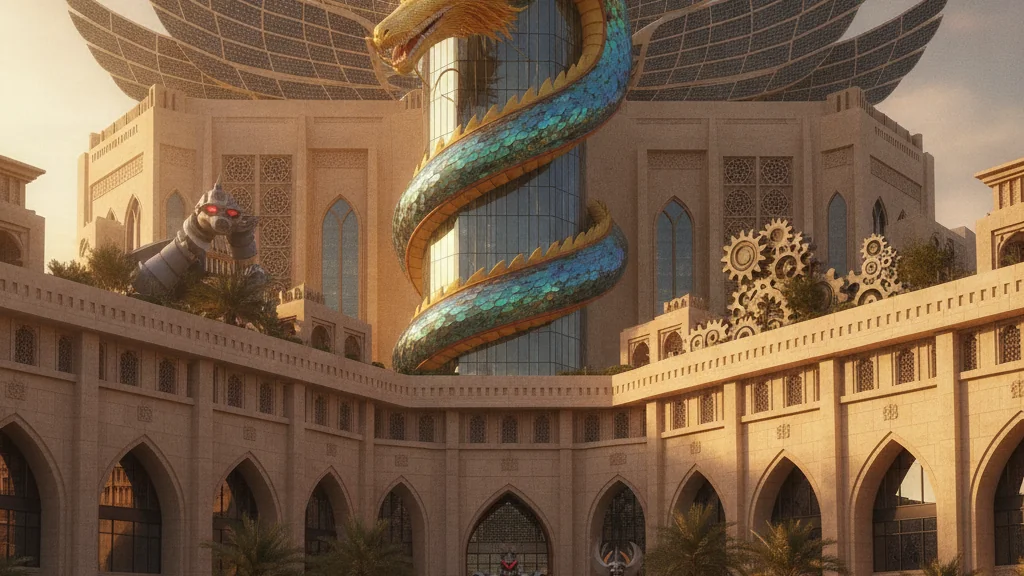
A Major Player Arrives in Dubai Media City
Toei Animation, one of the most influential animation studios in the world, is opening an office in Dubai. For anyone working in video production, animation, or content creation across the UAE, this is a significant development. The studio behind global franchises like One Piece, Dragon Ball, Sailor Moon, and Digimon is planting a flag in the Middle East — and the signal it sends about the region's growing creative economy is hard to ignore.
While the company's full announcement came through industry channels in late May, the implications for Dubai's production ecosystem are already generating conversation among local studios and international media observers. This move aligns with a broader pattern of major Japanese entertainment companies expanding into markets where demand for anime and animation content has grown significantly over the past five years.
Why Dubai? Strategic Fit in a Growing Market
The choice of Dubai as Toei's regional base makes sense when you look at the numbers. The Middle East and North Africa region has seen anime consumption grow at roughly double the global average rate since 2022. Streaming platforms like Netflix, Crunchyroll, and Shahid have invested heavily in Arabic-dubbed and subtitled anime content, and UAE-based distributors have been among the most active in licensing Japanese animation for regional broadcast.
Dubai Media City provides the infrastructure Toei needs — a free zone designed for media companies, with established legal frameworks, production facilities, and access to talent from across the region. For a company looking to manage licensing, production partnerships, and regional marketing from one hub, it's a logical base. The same ecosystem that attracted CNN, BBC, and Bloomberg now hosts one of Japan's most storied animation studios.
This development also complements broader shifts in the region's media landscape. The recent media expansion across the region, particularly in Saudi Arabia, has created demand for animation content that local studios are only beginning to meet. Toei's presence could accelerate skill transfer and co-production opportunities that benefit the entire regional ecosystem.
What This Means for Local Animation and Post-Production
For Dubai-based animation studios and post-production houses, Toei's arrival opens several possibilities. The most immediate is co-production. International studios setting up regional offices often seek local partners for aspects of production that benefit from on-the-ground knowledge — voice casting for Arabic versions, cultural consultation on content, and coordination with regional distributors.
There's also the talent pipeline angle. Japanese animation studios are known for rigorous training systems and technical discipline. If Toei runs workshops, training programs, or internship pipelines out of its Dubai office — something several other Japanese entertainment companies have done in their overseas offices — it could meaningfully raise the skill ceiling for local animators. Dubai already has a growing pool of 2D animation talent producing work for international clients, and direct exposure to Toei's production methodology would be a significant acceleration.
The post-production sector also stands to benefit. Anime production involves specialized workflows for coloring, compositing, sound design, and quality control. As Toei builds its regional operations, demand for local post-production services that understand these workflows will grow. For editors and studios already working at the intersection of traditional animation and live-action, this represents a new revenue stream and a chance to diversify beyond commercial and corporate work.
The Bigger Picture: Japan-Middle East Creative Corridor
Toei's Dubai office isn't happening in isolation. It follows a pattern of deepening creative ties between Japan and the Gulf region. Japanese anime films now regularly premiere at Middle East film festivals. UAE-based streaming platforms have been aggressive in acquiring Japanese content. And Gulf investment funds have shown growing interest in Japanese entertainment assets, from gaming studios to animation houses.
What started as a content consumption trend — Middle Eastern audiences discovering anime through streaming — is evolving into a production and partnership ecosystem. Toei's physical presence in Dubai means the relationship is no longer just about licensing existing shows to regional broadcasters. It's about making content with the region, for both local and global audiences.
For production companies deciding between live-action and animation for their campaigns, this expanding ecosystem adds weight to the animation side of the equation. When brands ask about choosing between motion graphics and live-action for their next campaign, the answer increasingly involves animation talent and infrastructure that didn't exist locally just a few years ago.
Opportunities for Dubai's Production Companies
For video production companies across the UAE, Toei's presence creates several concrete opportunities. First, there's the co-production route — working with Toei on animation projects that require a mix of Japanese and regional creative talent. Second, there's the service production angle — providing camera crews, post-production facilities, or logistical support for Toei's regional shoots and events. Third, there's the upskilling opportunity — local editors, animators, and colorists who invest in understanding anime production workflows will be well-positioned as the ecosystem grows.
The professional 2D and 3D animation production services in Dubai market has matured significantly over the past three years. Toei's entry validates that trend and accelerates it. Companies that build relationships with the studio early — through co-production, service work, or talent development — will have a first-mover advantage as more Japanese entertainment companies follow Toei's lead.
According to Toei Animation's corporate history, the studio has operated internationally for decades, with offices in Tokyo, Los Angeles, Paris, and now Dubai. Each international office has served a different strategic purpose — licensing and distribution in the West, co-production in Europe, and now regional expansion in the Middle East. The Dubai office represents a bet on the region's long-term potential as both a market and a production partner.
Looking Ahead: What Changes in the Next 12 Months
The next year will be telling. If Toei follows the pattern of its other international offices, the Dubai operation will likely start with licensing and distribution coordination, then gradually expand into production partnerships. Local studios should expect outreach for voice talent scouting, background art partnerships, and potentially full episode outsourcing for specific series.
For Dubai's broader creative ecosystem, the message is clear: the region is no longer just a market for imported content. Major global studios are starting to treat the UAE as a production base. This shift creates opportunities across the value chain — from training and education through pre-production, production, and post-production. The question for local studios is not whether to engage, but how quickly they can position themselves as credible partners for one of the world's most technically demanding animation industries.