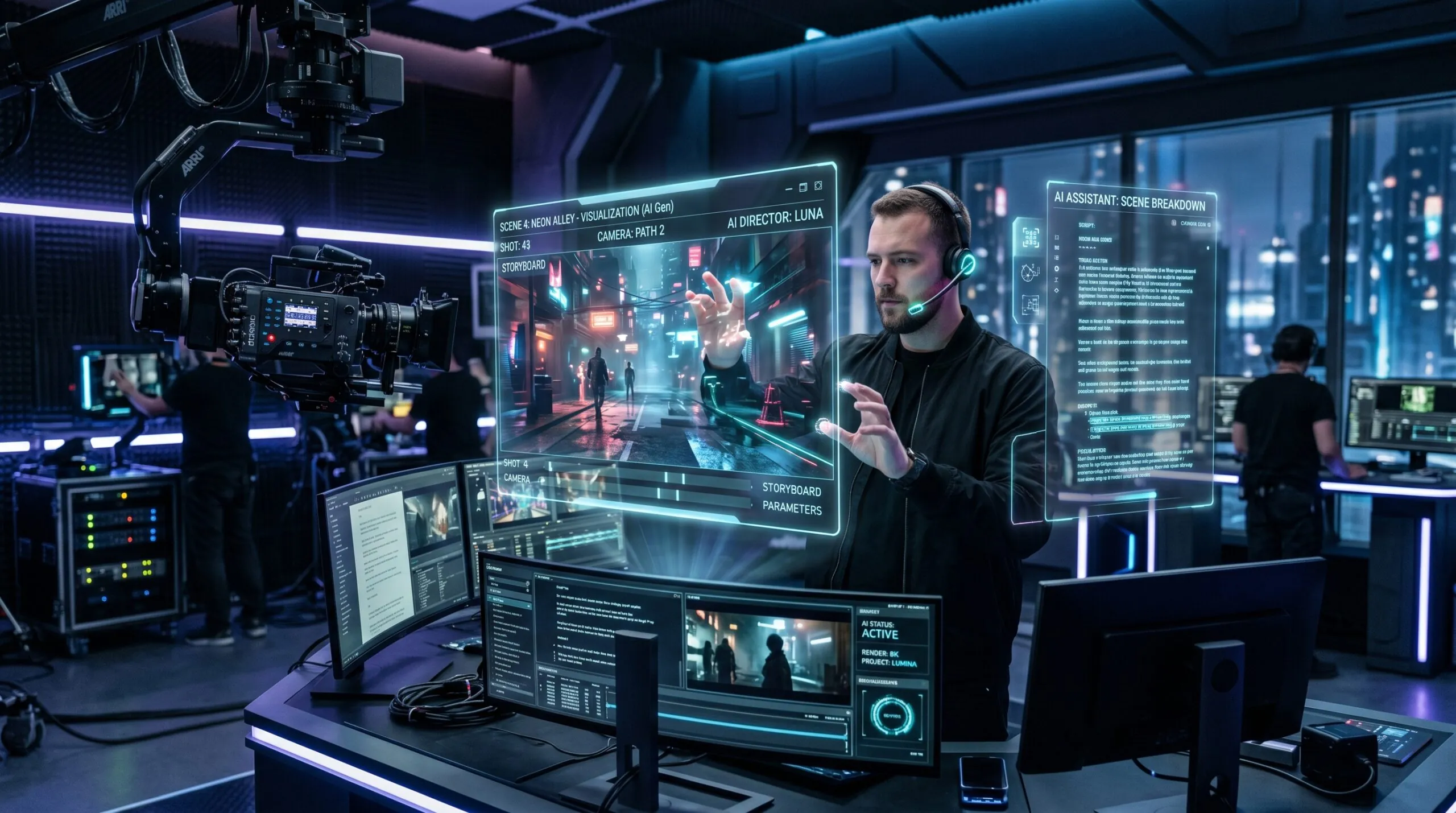
Video production has changed more in the last three years than it did in the thirty years before that. We’re at this weird, exciting point where the old ways of making films are smashing into artificial intelligence, and the collision is changing everything from how we start a project to how we finish it.
Remember spending days on color grading? Or digging through endless stock footage libraries trying to find that one perfect shot? Those days are pretty much over. Now, AI tools can scan hours of raw footage in minutes, suggest edits based on the emotional vibe of a scene, and even create custom b-roll that matches exactly what you need.
Here’s what most people misunderstand about AI in video work: it’s not here to replace human creativity. It’s here to boost it. The filmmakers I respect aren’t worried about algorithms taking their jobs. They’re pumped about having tools that handle the boring stuff, so they can focus on telling better stories.
Take script analysis. The old way meant reading drafts, scribbling notes, and hoping you caught all the pacing problems. Now, AI can analyze dialogue patterns, predict where audiences will zone out, and suggest changes based on what’s worked in similar films. Last month, a director I know used an AI script tool that flagged a 12-minute section in their documentary where viewers usually lose interest. They reworked that part, and test audiences stayed engaged 40% longer.
Post-production is getting overhauled too. Color correction used to feel like this secret art only a few people really understood. These days, AI color matching can look at reference images and apply consistent grading across a whole project in hours instead of days. I watched a demo recently where a system pulled colors from a client’s brand guide and automatically matched 45 minutes of corporate footage. A human colorist still made the final tweaks, but the heavy lifting was done.
Audio’s another area where AI is changing things. Noise reduction is so good now it can pick out a single voice in a noisy restaurant scene. Automated dialogue replacement tools can sync new audio with lip movements, saving days in the studio. A sound engineer friend told me they used to need three days to clean up audio from an interview shot on a windy day. Last week, they processed similar footage in under an hour with new AI tools.
Okay, let’s address the obvious: AI-generated content. Yes, systems can make realistic video from text descriptions now. Yes, they can create talking heads, animate characters, and produce visual effects that would’ve needed a massive VFX team two years back. The real question isn’t whether this tech exists—it’s how we use it without being sketchy about it.
The production companies doing well right now aren’t using AI to replace people. They’re using it to do things that weren’t possible before. Need an establishing shot of 1920s Paris for your period piece but can’t swing the travel budget? AI can make it. Want to see how a scene looks with different lighting before you set up a single light? AI can show you. Need your video translated into 15 languages with voiceovers that don’t sound like robots? AI’s got you covered.
What’s really wild is how this is shifting what clients expect. Three years ago, clients were impressed if we delivered a corporate video in two weeks. Now they ask why it takes more than three days. The pressure’s intense, but so are the opportunities. Companies using these tools are putting out better work faster and cheaper. The ones avoiding them are falling behind.
I was chatting with a cinematographer pal last week—he’s been at this for 25 years. He said something that stuck with me: ‘The tools keep changing, but the basics don’t. We’re still telling stories. We’re still trying to make people feel something. The camera might be smarter, the editing software might be quicker, but if the story sucks, none of it matters.’
He’s right, obviously. The fanciest AI tool won’t save a bad idea. What it will do is give good creators more time to focus on what actually matters—the creative vision, the emotional moments, the human connection that makes a video worth watching.
Looking at the rest of 2026, I’m seeing three big trends:
First, personalized video at massive scale. We’re already seeing platforms that can make thousands of unique videos from one template. Picture a real estate company automatically creating custom property tours for each buyer, with their name and specific interests built right in.
Second, real-time collaboration tools. Cloud editing platforms are getting so good that a director in Dubai can work with an editor in London and a colorist in LA like they’re all in the same room. Remote work exploded during the pandemic, but now the tools are actually making it work smoothly.
Third, ethical AI guidelines. As the tech improves, the industry’s figuring out rules for transparency. When do you tell viewers something was AI-generated? What about copyright when AI trains on existing films? These conversations are happening now, and they’ll determine how we use these tools without being shady about it.
The most exciting part? We’re just getting started. The AI tools we have today will look primitive in another two years. The production companies that’ll do well are the ones playing with this stuff now, learning what it can and can’t do, and figuring out how to weave it into their creative process.
This isn’t about picking human creativity OR artificial intelligence. It’s about finding that sweet spot where each makes the other better. The best videos of 2026 won’t be made entirely by humans or entirely by AI. They’ll be made by humans using AI as the most powerful creative tool we’ve ever had.
The camera operator who spends less time fussing with settings and more time capturing real moments. The editor who lets AI do the rough cut while they focus on emotional rhythm. The colorist who uses AI for consistency while their artistic eye handles the final look. That’s where video production is headed—not machines replacing people, but people working smarter with machines.
For those of us in this business? It’s time to stop being scared of the technology and start learning it. The learning curve’s steep, no doubt. But the view from the top is going to be something else.
Looking for professional AI video production services in the UAE? From enterprise-grade generative workflows to full-service post-production, the right tools make all the difference.
Looking for video production and content creation services in the UAE? Professional production partners can help bring your creative vision to life.
For more on emerging technology trends, explore industry resources and stay updated on the latest developments.