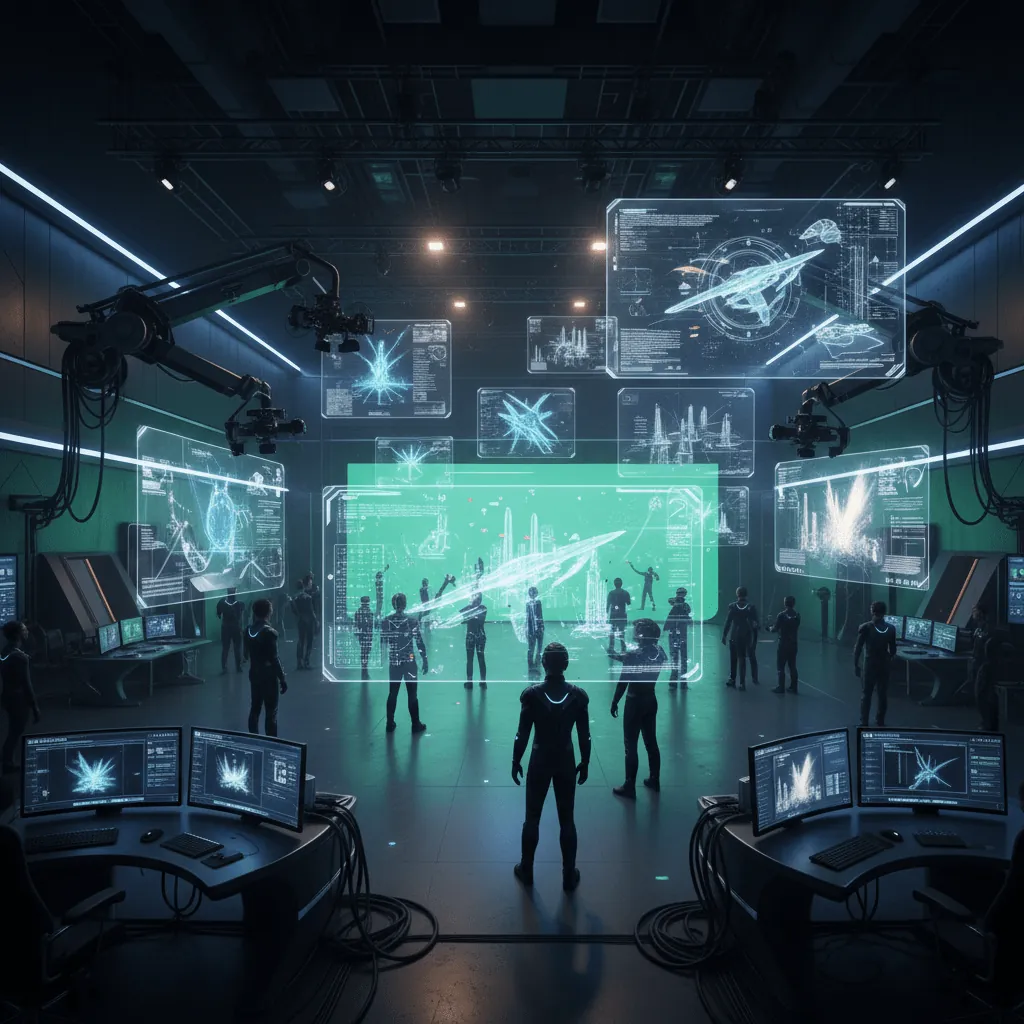
The Future of VFX in Independent Filmmaking: Democratizing Hollywood Magic The field of visual effects has undergone a seismic shift over the past decade. What was once the exclusive domain of major Hollywood studios with multi-million dollar budgets has now become accessible to independent filmmakers around the world. And this democratization of VFX technology is reshaping the creative possibilities for storytellers who don’t have blockbuster budgets but possess equally compelling visions. The Accessibility Revolution Ten years ago, creating convincing visual effects required specialized hardware, expensive software licenses, and teams of highly trained artists. A single VFX shot could cost tens of thousands of dollars. Today, the barriers have dramatically lowered. Real-time rendering engines like Unreal Engine and Unity, originally developed for gaming, have become powerful filmmaking tools. These platforms offer photorealistic rendering capabilities that were unimaginable just a few years ago, and they’re available for free or at minimal cost. Cloud computing has further accelerated this accessibility. Render farms that once required massive capital investment can now be accessed on a pay-per-use basis. An independent filmmaker in Dubai can upload their scene to a cloud service and receive finished frames within hours, paying only for what they use. This eliminates the need for expensive local hardware and allows creators to scale their rendering power based on project needs. AI-Powered VFX: The Game Changer Artificial intelligence is perhaps the most transformative force in modern VFX. Tools that use machine learning can now perform tasks that previously required days of manual labor in mere minutes. Rotoscoping— the painstaking process of separating foreground elements from backgrounds— can now be accomplished with AI tools that learn object boundaries and track them across frames. This alone saves hundreds of hours on a typical project. Deep learning algorithms can generate realistic textures, simulate complex physics, and even create entirely synthetic environments. NVIDIA’s GauGAN, for example, allows artists to paint with semantic labels— draw a blue line and it becomes a river, sketch a green area and it transforms into a forest. This intuitive approach lowers the technical barrier while maintaining artistic control. Perhaps most exciting is the emergence of AI-assisted character animation. And motion capture, once requiring specialized suits and camera arrays, can now be achieved with consumer-grade cameras and AI processing. This means independent filmmakers can create convincing digital characters without Hollywood-level budgets. The Micro-Budget VFX Pipeline What does a modern VFX pipeline look for an independent production? Let’s break it down: 1. Previsualization: Using game engines to create animatics that look nearly final, allowing directors to experiment with camera angles and timing before committing to expensive shoots. 2. On-Set VFX: Real-time compositing on set using LED walls (like The Mandalorian’s StageCraft technology, now available in scaled-down versions) or tablet-based preview systems that show actors and crew what the final composite will look like. 3. Post-Production: Cloud-based collaboration where artists from different locations can work on the same shots simultaneously. AI tools handle roto, tracking, and basic compositing, freeing artists to focus on creative decisions. 4. Final Render: Distributed rendering across cloud services, with AI denoising reducing render times by up to 90%. Case Study: The Independent Success Story Consider the journey of “The Last Repair Shop,” a recent documentary that won the Academy Award for Best Documentary Short. The film features subtle but effective VFX that enhance the storytelling without drawing attention to themselves. Aging photographs come to life, historical locations are reconstructed, and emotional moments are visually amplified— all achieved with a modest budget using modern tools available to any dedicated filmmaker. Another example is “Everything Everywhere All at Once,” which began as an independent production before becoming a global phenomenon. The film’s innovative VFX— from googly eye universes to hot dog fingers— were created with a combination of practical effects and digital wizardry that didn’t require Marvel-level resources. The team used After Effects, Blender, and custom scripts to achieve their distinctive visual language. The Dubai Advantage In regions like Dubai and the UAE, independent filmmakers have unique advantages. The government’s investment in creative industries has created infrastructure and funding opportunities. The diverse landscapes— from futuristic cityscapes to expansive deserts— provide versatile backdrops that can stand in for virtually any location with the right VFX enhancement. Local VFX studios, including JJ Agency Films, are adapting to serve this growing independent market. Rather than competing solely for Hollywood blockbusters, these studios are developing streamlined pipelines specifically for independent productions. Package deals that include previs, on-set supervision, and post-production at fixed rates make professional VFX accessible to filmmakers working with limited budgets. The Creative Implications This technological democratization isn’t just about cost savings— it’s changing the nature of storytelling itself. When VFX becomes as accessible as a camera lens, filmmakers can incorporate visual metaphors and imaginative elements that were previously impractical. A character’s internal emotional state can be externalized through environmental changes. And historical periods can be recreated without building physical sets. Entire worlds can be constructed in the digital realm. This accessibility also fosters diversity in storytelling. But filmmakers from underrepresented backgrounds can tell culturally specific stories with visual richness that matches their narrative ambition. A folktale from Emirati heritage can be brought to life with the same visual splendor as a Greek myth adapted by a major studio. The Skills Shift As the tools become more accessible, the required skill set evolves. Today’s VFX artist needs to be part technician, part artist, and part problem-solver. Understanding the fundamentals of lighting, composition, and color theory remains essential, but now complemented by knowledge of real-time engines, procedural generation, and AI-assisted workflows. Educational institutions are adapting accordingly. Online platforms like Coursera and Udemy offer courses in Unreal Engine for filmmaking, while traditional film schools incorporate VFX fundamentals into their core curriculum. The result is a new generation of filmmakers who think visually from the earliest stages of development, seamlessly integrating practical and digital elements. The Business Model Evolution The economics of independent filmmaking with VFX are changing. And crowdfunding platforms like Kickstarter and Seed&Spark allow filmmakers to raise funds specifically for visual effects, often offering backers behind-the-scenes looks at the VFX process. Streaming services, hungry for content, are increasingly acquiring independent films with strong visual identities, creating a market for VFX-enhanced storytelling. Production companies are developing hybrid models where they invest in VFS as part of their equity in a project, recognizing that strong visuals increase a film’s marketability and festival potential. Film festivals themselves have created categories specifically for VFX achievement in independent cinema, further validating this artistic direction. The Future Horizon Looking ahead, several trends will continue to shape independent VFX: 1. Real-time everything: The line between pre-production, production, and post-production will blur as real-time rendering allows for final-quality visuals during shooting. 2. But generative AI: Tools that can create custom assets based on text descriptions will further lower the barrier to creating unique visual elements. 3. Volumetric capture: Affordable systems for capturing performances in 3D will enable the creation of digital doubles and virtual performances. 4. Blockchain for assets: Decentralized marketplaces for VFX assets will allow filmmakers to buy, sell, and trade models, textures, and effects. 5. Collaborative virtual production: Remote teams working together in virtual environments using VR and AR tools. Conclusion: The New Creative Frontier The future of VFX in independent filmmaking isn’t about replicating Hollywood on a smaller scale— it’s about creating something new. The accessibility of powerful tools empowers filmmakers to develop distinctive visual languages that serve their unique stories. The constraints of budget become creative challenges rather than limitations. For independent filmmakers in Dubai and beyond, this represents an unprecedented opportunity. The magic of visual effects is no longer locked behind studio gates. With creativity, technical curiosity, and strategic use of available tools, today’s independent filmmakers can create visual experiences that captivate audiences and push the boundaries of what’s possible in cinema. The revolution isn’t coming— it’s already here. And it’s being led by independent voices armed with tools that were once reserved for giants. The future of filmmaking is democratic, diverse, and digitally empowered. The only limit is imagination.
Looking for professional VFX and CGI services in the UAE? Professional production partners can help bring your creative vision to life.
For more on visual effects industry, explore industry resources and stay updated on the latest developments.
Read more: VFX Supervisor Gary Fedorenko.