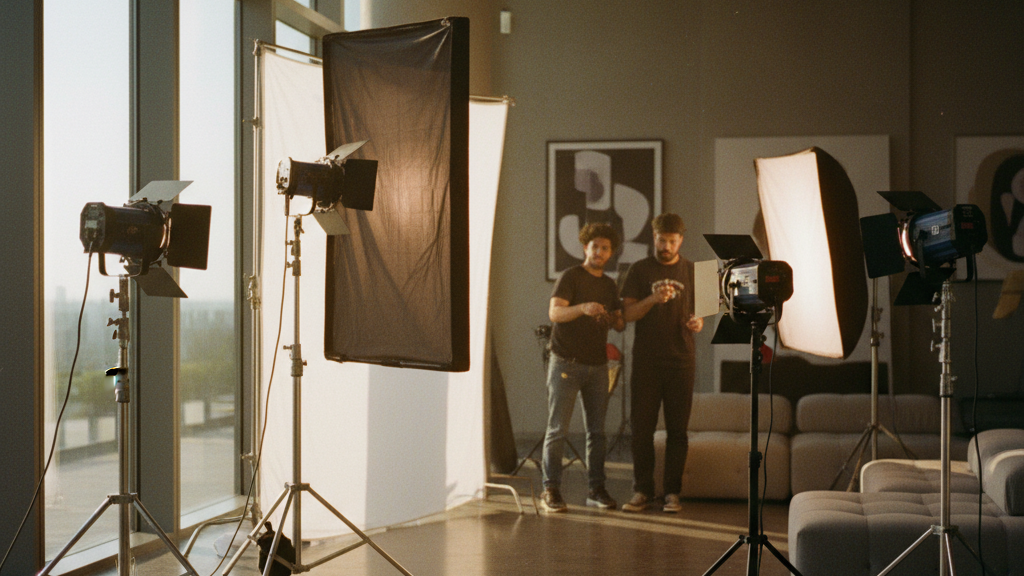
Dubai's skyline produces some of the most recognisable visuals in the world, but for video production crews working indoors, that famous sun creates real problems. The Arabian sun sits high and bright for most of the year, casting sharp shadows and creating extreme contrast that consumer and prosumer cameras struggle with. In areas like Business Bay or Dubai Marina, glass towers reflect light in every direction, turning what should be a controlled interior shoot into something closer to outdoor cinematography. Getting professional results means understanding these conditions and working with them rather than fighting them.
Understanding Dubai's Sunlight
The main problem in Dubai interior shoots is the sun itself. Unlike temperate regions where cloud cover diffuses light naturally, Dubai gets months of uninterrupted direct sunlight. This light stays high in the sky for most of the day, creating hard, defined shadows and contrast ratios that exceed what most cameras can handle in a single frame. The reflections off neighbouring glass towers add another layer of complexity. A room that seems perfectly shaded at 10am can be flooded with reflected hot spots an hour later as the sun shifts. Knowing the sun's path and how it interacts with the specific building you're shooting in is the first thing to figure out during your location scout.
Window-Lit Interiors and the Exposure Problem
Most premium Dubai locations come with floor-to-ceiling windows. Offices in DIFC, apartments in JLT, penthouses in Dubai Marina — they all have that wall of glass designed to show off the view. From a lighting perspective, those windows act like giant uncontrolled light sources. Direct sun through a window creates a hotspot several stops brighter than the rest of the room. Expose for the subject and the window blows out completely. Expose for the window and your subject turns into a silhouette. The orientation matters too. East-facing windows blast light in the morning. West-facing windows give you that intense golden-hour beam in the afternoon, which looks great on Instagram but creates flare, colour shifts, and uneven exposure on set. Planning the shoot schedule around the window orientation is not optional.
Gear That Actually Helps
Fighting Dubai's sun requires specific equipment. ND gels for windows are the most practical solution — large rolls of neutral density material applied directly to the glass reduce the incoming light by several stops, bringing it closer to manageable levels. Diffusion frames (8x8 or 12x12 silk frames) soften direct sunlight, turning a harsh beam into a broad, flattering source. Flags and C-stands let you cut and shape light precisely. Reflectors bounce fill into shadow areas. And powerful bi-colour or RGB LED panels give you controllable artificial light that can compete with or complement natural light. Most of this gear is available for rental from production houses in Al Quoz, and knowing what to rent and when makes the difference between a controlled shoot and a day spent fighting the light. For crews building out their kit, understanding professional filming setups in Dubai helps inform what to prioritise.
Balancing Natural and Artificial Light
The real skill in Dubai interior lighting is balance. You are not trying to kill the natural light — you are shaping it and supplementing it. Match your artificial lights to the daylight colour temperature (around 5600K in Dubai). If the window is providing a strong directional key light, use an LED panel on the fill side to lift shadows. If the window light is too intense, knock it down with ND gel and let your LEDs take over as the primary source. This is especially relevant in Al Quoz studio spaces or large corporate lobbies where you have limited control over the environment itself.
Adapting Three-Point Lighting for Harsh Sun
The classic key-fill-backlight setup still applies, but the roles shift. The window often becomes your key light — but it needs taming. Diffuse it with scrims or ND. Your fill light then needs to be strong enough to lift the deep shadows the sun creates. A large softbox or bounced LED panel works well here. The backlight needs careful handling to avoid creating another hotspot. Sometimes the window already provides natural backlighting, so your artificial backlight can be dialled way down or turned off entirely. For a thorough technical overview of different lighting setups, a good professional lighting techniques guide offers detailed breakdowns that apply directly to these scenarios.
A Practical Workflow for Dubai Interior Shoots
A successful Dubai interior shoot follows a clear sequence. Start with a proper site survey during the pre-production planning for Dubai shoots. Note window orientation, check the sun path at your shoot time, identify power outlets, and measure ambient light levels. On the day, control ambient light first — close blinds, set up flags to block direct sun. Then apply ND gel or diffusion to windows. Only after controlling the natural light do you bring in artificial lights. Throughout the shoot, monitor exposure with a light meter and waveform monitor or false colour. This iterative approach is standard in real Dubai production workflows and separates amateur setups from professional results.
Know When to Call in the Pros
Some locations and projects demand more than a single operator can manage. Complex corporate shoots in DIFC towers, multi-room villa tours in Palm Jumeirah, or product launches in Dubai Design District all benefit from experienced lighting crews who know how to handle the specific challenges of Dubai's environment. Working with professional video production services in the UAE means having access to the right gear, the right experience, and the right workflow from the start — which saves time, money, and delivers better results than figuring it out on the day.