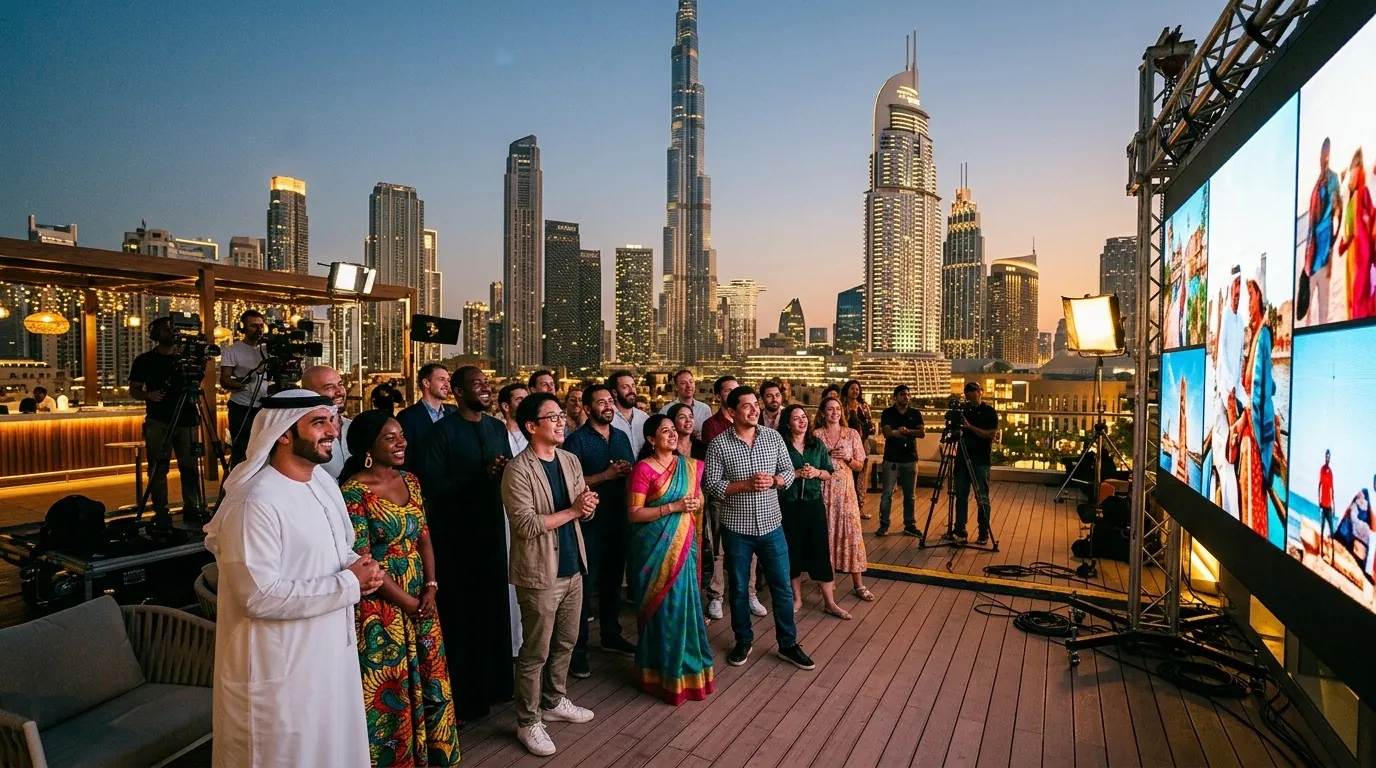
Dubai is a city of nationalities. Walk through any mall, ride the Metro, or grab coffee in Business Bay — and you’ll hear a dozen languages within ten minutes. Over 200 nationalities call this place home. That’s not just a fun fact. For anyone creating video content here, it’s the single biggest challenge — and the single biggest opportunity.
So how do you make video content that actually connects with an Indian engineer in Silicon Oasis, a British expat in the Marina, a Saudi family visiting for the weekend, and a Filipino nurse in Al Qusais? You don’t speak to them the same way. But you also don’t ignore the fact that they’re all in the same city, sharing the same space.
This is where cross-cultural video marketing comes in. It’s not about translating your English ad into Arabic and calling it a day. It’s about understanding cultural nuances, visual cues, and emotional triggers that work across multiple audiences — while still feeling authentic to each one.
Why One-Size-Fits-All Content Fails in Dubai
The biggest mistake brands make? Creating a single video campaign aimed at “everyone.” What ends up happening is the content lands with no one.
Here’s a reality check: a joke that lands with an Australian expat will confuse a local Emirati. A music track that feels nostalgic for a Lebanese viewer might feel completely out of place for someone from South Korea. Visual symbols that work in Western marketing — like a thumbs-up — carry completely different meanings in other cultures.
Successful video marketing in Dubai means embracing the complexity. It means planning your content strategy around who’s actually watching — not who you wish was watching.
The Three-Layer Approach to Cross-Cultural Video
Here’s a framework that works across Dubai’s multicultural landscape. It breaks down into three layers:
Layer 1: Universal Emotional Core
Some emotions are universal. Family, ambition, pride, humor, joy — these transcend borders. The trick is wrapping them in visuals that don’t belong to any single culture. Think city skylines at sunset, shared meals, celebrations, and genuine human interactions. No flags, no stereotypes, no cultural shorthand that excludes anyone.
This is your base layer. The foundation that ensures your video doesn’t alienate anyone before you even get to the specifics.
Layer 2: Cultural Touchpoints
Here’s where you get specific — but strategic. Instead of trying to reach all 200 nationalities in one video, pick two or three key audience segments and include subtle cues that resonate with them. This could be:
- A family gathering scene that mirrors South Asian multi-generational dynamics
- An office setting reflecting the corporate culture of the European expat community
- Cuisine references — shawarma, biryani, sushi — that signal “this is for you too”
- Landmarks that have meaning across cultures (Dubai Frame, Museum of the Future, Expo City)
The goal isn’t to checkbox every culture. It’s to create enough touchpoints that multiple audiences feel seen.
Layer 3: Language Versions and Localization
This is the most obvious layer — and also the most mismanaged. Proper localization isn’t just dubbing an English voiceover into Arabic. It’s rethinking pacing, humor, expressions, and cultural references for each language version.
For Dubai specifically, we recommend at minimum: English for the broadest reach, Arabic for local and regional audiences, and either Hindi, Urdu, or Tagalog depending on your target demographic. Each version should feel native, not translated.
What Actually Works: Real Examples
Visual storytelling over dialogue-heavy content. The less you rely on language, the wider your reach. A well-shot sequence of craftsmanship, celebration, or innovation communicates across any language barrier.
Local talent and authentic settings. Dubai audiences can tell when a production flew in a foreign team and shot generic “Middle East” footage. Using local actors, familiar locations, and real Dubai neighborhoods builds instant credibility.
Short-form for social, long-form for brand. TikTok, Reels, and YouTube Shorts are the great equalizers — Dubai’s diverse audience consumes short-form content at massive rates. Longer brand films work for luxury and corporate segments, but for broad reach, keep it under 60 seconds.
Common Mistakes We See (And How to Avoid Them)
1. Assuming neutral means bland. Safe content is often boring content. You can be inclusive without being vanilla. Use vibrant visuals, dynamic editing, and strong storytelling — just don’t anchor it to a single cultural perspective.
2. Forgetting about the GCC region. Dubai isn’t an island. Many viewers are from Saudi Arabia, Qatar, Kuwait, and Oman. Content that works for Dubai expats might not resonate with GCC nationals. If you’re targeting regionally, build in cues for both local and expatriate audiences.
3. Ignoring religious and cultural sensitivities. This seems obvious, but we still see brands push boundaries in ways that backfire. Modesty, respect for tradition, and awareness of religious holidays aren’t restrictions — they’re parameters that help you create thoughtful content.
4. Treating localization as an afterthought. “We’ll just add subtitles later” is a trap. Plan for localization from day one. Frame your shots to leave room for text overlays in multiple languages. Write scripts that translate well. Record separate voiceover sessions rather than dubbing over one master track.
How to Start Your Cross-Cultural Video Strategy
- Audit your audience data. Pull your analytics — who’s actually watching your current content? Nationality, age, language preferences. What you’ll find is probably more diverse than you assumed.
- Identify your top 3 audiences. Pick the three biggest or most valuable segments. Create content that speaks directly to them first, then broadens out.
- Test before you invest big. Run a short-form pilot campaign targeting one segment. Measure engagement. Refine. Scale.
- Work with a production partner who gets it. Not every video agency in Dubai understands cross-cultural nuance. Look for a team with a diverse portfolio and genuine multicultural experience.
Final Thoughts
Cross-cultural video marketing in Dubai isn’t a niche — it’s the default. You can’t operate in this city without bumping into its diversity. The brands that lean into it, that treat it as an advantage rather than a problem, are the ones that build real, lasting connections with their audiences.
This is especially true in tourism marketing, where video content must resonate with travelers from dozens of nationalities simultaneously. Dubai's tourism strategy is a masterclass in cross-cultural video — using nuanced visual storytelling to welcome visitors from every corner of the world. Explore how it all comes together in our post on the role of video in Dubai's tourism marketing strategy.
And honestly? That’s what makes this city such a great place to make video content. Every project is a puzzle. Every audience is different. No two campaigns are the same.
Get it right, and your video doesn’t just reach people across cultures. It brings them together.
Need help creating video content that connects across Dubai’s diverse population? JJ Agency Films specializes in cross-cultural video production — from strategy to final delivery. Get in touch.
Looking for video marketing services in the UAE? Professional production partners can help bring your creative vision to life.
For more on video marketing statistics, explore industry resources and stay updated on the latest developments.
The cross-cultural expertise Dubai agencies have built is directly applicable to Saudi Arabia's booming media market. Discover how in our guide to Saudi Arabia's media boom and opportunities for Dubai production companies.
Read more: Video SEO Guide for 2026.