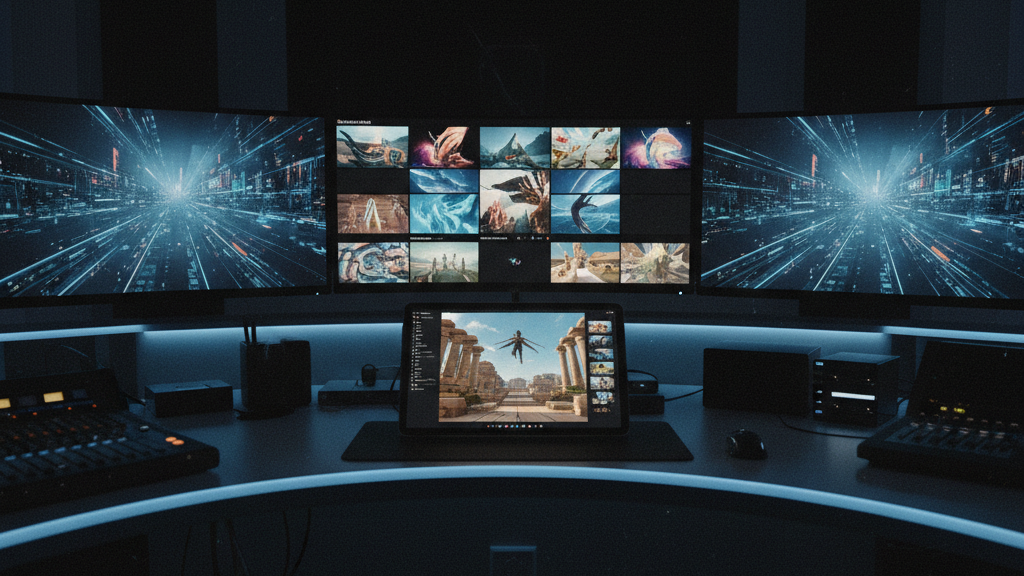
The Rise of AI Storyboarding: Streamlining Pre-Production in Dubai
June 1, 2026. The studios of Dubai Media City and Dubai Studio City know a thing or two about new tools. Pre-production has always been a slow process: script breakdowns, concept art, hand-drawn storyboards. But over the past year, AI storyboarding tools have started changing how production houses conceptualize and pitch their work. The timelines are shorter, and the budgets go further.
What is AI Storyboarding?
AI storyboarding uses generative AI models to turn scripts and text descriptions into a sequence of images. Instead of hiring an artist to draw each frame by hand or digging through stock image libraries, you feed the tool a script and it generates frames showing camera angles, character positions, and scene compositions. It gives you an immediate visual sense of how a scene might work before anyone picks up a camera.
Speeding Up Client Pitch Processes
In Dubai's competitive market, speed matters. Getting a storyboard done used to mean waiting days, sometimes weeks, for an illustrator to finish. With AI storyboarding, studios can generate detailed visual sequences for a client pitch in minutes. A brief for a luxury car ad arrives in DIFC, and within an hour, you can show a dynamic storyboard of the car driving down Sheikh Zayed Road. You can iterate and refine during the same meeting, adjusting based on client feedback on the spot. That kind of turnaround changes how agencies pitch.
Cost Savings for Dubai Production Companies
Manual storyboarding is expensive. Talented artists charge accordingly, and the hours add up fast. AI reduces the need for extensive manual drawing, letting studios redirect that budget to actual production. It also cuts down on location scouts. Instead of sending a team to scout five different desert locations, you can generate mockups in various settings and narrow down options before stepping out of the office. For production companies in Dubai Media City, that means quicker decisions and better budget allocation.
Key AI Storyboarding Tools and Their Features
A few platforms stand out right now:
- Runway ML: A pioneer in generative AI video. Its Gen-2 model turns text prompts or existing images into video clips, making it useful for animated storyboard sequences. For Dubai studios building AI-powered video production workflows, Runway ML offers a solid pre-visualization suite.
- Pika Labs: Generates high-quality video clips from text and images quickly. The interface is easy to pick up, so directors can experiment with different visual styles and camera movements without needing a technical background.
- Boords AI: Built specifically for storyboarding. It generates panels from scripts, suggests visual elements, and makes team collaboration straightforward. Good for teams that want a traditional storyboard workflow accelerated by AI.
- Shotstack: An API-driven approach. It lets production companies automate video creation at scale, which fits into larger AI storyboarding pipelines for templated or repetitive content work.
These tools, alongside work from OpenAI on its Sora model (see the Sora announcement), are pushing what's possible in visual storytelling.
How Dubai Studios are Adopting These Tools
Adoption is spreading across the city. Agencies in Alserkal Avenue, production houses in Dubai Media City, corporate content teams in DIFC — they're all integrating AI storyboarding into their pre-production pipelines. Early adopters report that clients understand the vision faster and give more useful feedback because they can actually see what the final scene will look like. The common workflow now: generate an AI storyboard as a first draft, then refine it with a human artist's input.
The Creative Benefits: More Iteration, Better Visualization
The creative upside goes beyond speed. Directors can try different camera angles, lighting setups, and character positions without spending time or money on manual re-draws. You can explore ten different approaches to a scene in the time it used to take to finish one storyboard panel. Clients see a near-final visual, so feedback is sharper and more useful. Misunderstandings drop, revisions are more focused, and the whole production runs smoother.
Limitations and Where Human Creativity Still Matters
AI storyboarding is a useful assistant, but not a replacement for experienced directors and artists. AI generates visuals from patterns in its training data. It has no real understanding of emotion, cultural nuance, or why certain compositions work. AI-generated frames can feel generic or miss the subtle emotional cues a human artist would catch. The ethical questions around AI in AI scriptwriting and AI editing tools apply to storyboarding too. Human oversight is needed. The artist's role shifts from drawing every frame to curating and refining the AI's output, adding the creative decisions that make a storyboard feel intentional rather than generated.
For production companies and brands in Dubai looking to integrate these tools into their workflow, the key is knowing when AI speeds things up and when human judgment still carries the weight. Working with a team that understands both sides of that equation matters. Professional AI video production services in the UAE combine AI efficiency with the creative direction that turns a sequence of generated frames into a compelling visual narrative.